
What to Expect Before and After Stump Grinding
A tree stump can remain in a yard for years after the original tree is gone. It may interfere with mowing, interrupt landscaping, occupy useful space, or create an obstacle near a walkway or driveway.
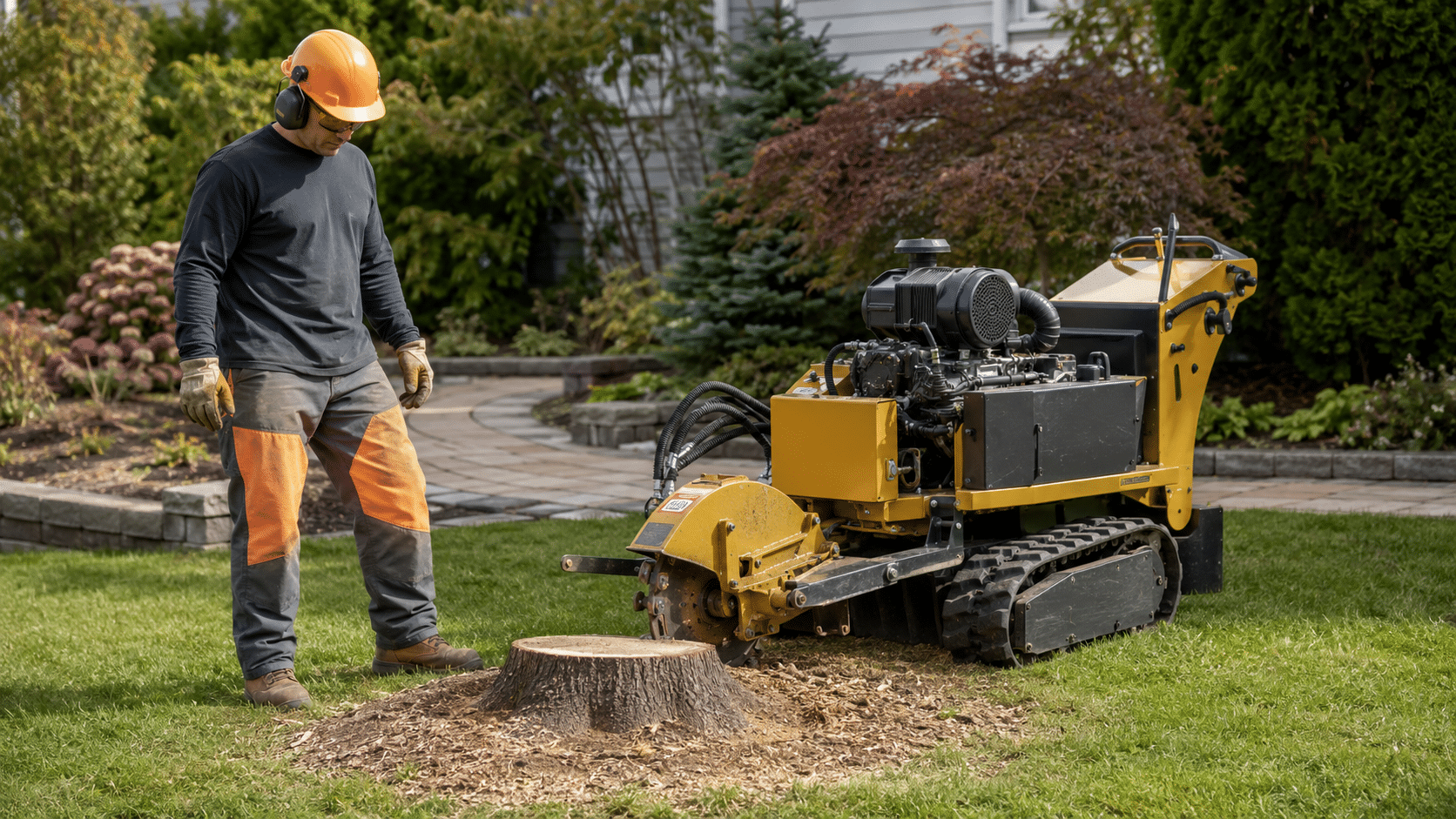
Stump grinding reduces the visible stump into small wood pieces. It does not pull the complete root system out of the ground, and the work required depends on more than the stump’s diameter.
Knowing what information matters before the estimate—and what remains afterward—can help you plan the project more clearly.
Stump Grinding and Tree Removal Are Separate Services
Tree removal addresses the standing tree. Stump grinding addresses the stump left at ground level.
Some property owners leave the stump temporarily and request grinding later. Others include both services in the same estimate because they already know the stump will interfere with their plans.
If you want both the standing tree and the stump addressed, mention both when describing the project.
Information to Gather Before Requesting an Estimate
You do not need exact measurements, but a few details can help explain the request:
- The stump’s location on the property
- Its approximate width
- How high it sits above the surrounding ground
- Whether it has exposed surface roots
- What is located nearby
- The route equipment would use to reach it
- How you want to use the area afterward
Photos taken from more than one angle can show the stump, nearby property features, and available access.
Access Is Part of the Project
Equipment must reach the stump. A stump in an open front yard creates a different situation from one behind a building or inside a fenced area.
Useful access details include:
- Gate widths
- Narrow side yards
- Steps or slopes
- Fences and retaining walls
- Sheds and other buildings
- Walkways and patios
- Landscaping along the access route
- Parked vehicles or movable obstacles
Do not assume that a stump visible from the street is automatically easy to reach. Include access information with the estimate request.
Nearby Features Should Be Identified
Explain what is positioned around the stump. This may include a driveway, walkway, fence, garden bed, irrigation component, outdoor lighting, or another property feature.
Also share any information you have about known underground utilities or other buried components. Their locations should not be guessed based only on what is visible at the surface.
What Happens During Grinding
Grinding equipment reduces the visible wood into smaller pieces. The exact approach depends on the stump’s size, height, location, condition, and surroundings.
Keep people and pets away from the work area. Vehicles, outdoor furniture, toys, and other movable items should not block the planned access route or work area.
The work focuses on the stump rather than extracting the complete underground root system.
What Remains Afterward
Most roots remain below ground and gradually decompose. The grinding process also produces a mixture of wood pieces and surrounding material.
The amount of material depends on the size of the stump and the scope of the work. Discuss how the area will be left so you understand what is included in the project.
Because roots remain underground, the ground can change as buried wood breaks down over time. Future use of the area should account for that possibility.
Planning the Area’s Next Use
Your goal for the space can affect how you describe the project.
Common plans include:
- Making mowing easier
- Reclaiming part of the lawn
- Removing an obstacle near a walkway
- Preparing for a garden or landscaped area
- Opening space for another property plan
Stump grinding reduces the visible obstruction, but it does not automatically prepare the area for every possible construction or planting project. Explain your intended use when requesting the estimate.
Can an Older Stump Still Be Ground?
A stump does not need to be from a recent tree removal. Older stumps can still be considered for grinding.
Age can change the stump’s condition, but size, location, access, surrounding property features, and the desired result remain important project details.
Stumps Near Fences, Walkways, and Buildings
A stump close to another property feature may require more planning than one in an open lawn.
When taking photos or describing the location, include:
- The distance to fences or walls
- Nearby paved surfaces
- Changes in ground level
- Tight corners along the access route
- Landscaping you want to preserve
These details make the complete setting easier to understand before the work is assessed.
Frequently Asked Questions
Does stump grinding remove every underground root?
No. Stump grinding reduces the visible stump while most roots remain underground and naturally decompose over time.
Can a stump be ground years after the tree was removed?
Yes. An older stump can still be considered for grinding. Its condition, size, location, and accessibility should be included in the estimate request.
Why does gate width matter?
Equipment must reach the stump. A narrow gate or side yard may affect access to the work area.
Is stump grinding included automatically with tree removal?
No. Tree removal and stump grinding are separate services. Include both when you want the standing tree and remaining stump addressed.
Will the ground remain unchanged after the roots decompose?
Not necessarily. Underground roots and wood break down over time, so the surrounding ground may gradually settle or change.
Request Stump Grinding in Northern New Jersey
If an old stump is interfering with your lawn, landscaping, walkway, or plans for the property, Lodema Tree Service can assess its size, location, and accessibility.
Call (973) 875-9875 or request a free estimate.
Leave a Comment
(0 Comments)